

 VN
Why choose the coating in the first place?
Spiral welded steel pipes (SSAW) have the advantages of strength, large diameter, and flexible construction. However, the life of the pipe depends a lot on the coating: the “armor” layer that helps prevent rust, moisture, salt, chemicals and impact during operation. Choosing the right one from the beginning will help:
- Longer lasting pipes – less maintenance,
- Safer water source when used for potable water,
- Lifecycle cost savings (no more repairs),
- Easy to meet tender documents and acceptance requirements.
Which coating to choose for SPIRAL WELDED STEEL PIPE?
1) Epoxy – the “standard” and popular choice for spiral welded steel pipes
- When to choose: Clean water pipes, spiral welded steel pipe projects need familiar coatings, easy to buy, easy to check quality.
- Strength: Good adhesion, stable corrosion resistance, suitable for both inside and outside of spiral welded steel pipes.
- Consideration: Drying/curing time may be longer than some other systems; spiral steel pipes must be installed correctly to avoid peeling.
📌 READ MORE: Epoxy Coated Spiral Welded Steel Pipe
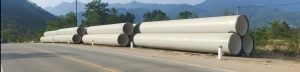
2) Polyurethane (PU) – durable, fast progress
- When to choose: Pipelines with sand/abrasive particles, need to withstand impact/bending well (long distance transportation, underground pipe pulling), or need to progress quickly (many PU systems dry quickly).
- Strengths: Flexible paint film, good abrasion resistance, easy to achieve desired thickness, suitable for both inside and outside of spiral welded steel pipes.
- Consider: Material price can be slightly higher than epoxy depending on configuration; still need an experienced spiral steel pipe construction team.
📌 READ MORE: Spiral Welded Steel Pipe with Polyurethane (PU) Coating

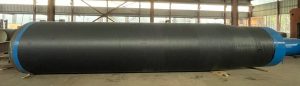
3) Bitum / coal-tar (bitumen coating) – Economical solution for underground burial
- When to choose: Underground pipeline, prioritize investment cost; convenient on-site repair.
- Strengths: Widely used for underground spiral welded steel pipes; reasonable cost, good isolation from wet soil.
- Consider: Some places have strict environmental regulations with “tar”-based materials. If the project is in such an area, consider epoxy/PU instead.
📌 READ MORE: Spiral Welded Steel Pipe Coated with Bitumen
4) Cement mortar lining – smooth pipe interior, less water resistance
- When to choose: Large diameter clean water transmission line; want smooth pipe, reduce sediment accumulation.
- Strengths: Creates an alkaline environment to “protect” the inner steel surface, mechanical durability, good flow.
- Considerations: The mortar layer is heavier; need to be transported and installed carefully to avoid cracking of spiral welded steel pipes at strong impact locations.
5-question formula: choosing a coating has never been easier
- What is the pipe placement environment?
Underground, open, coastal, polluted areas… The “harsher” the environment, the more durable the coating is needed. - Is the flow free of sand/solid particles?
If so, prioritize PU (wear-resistant) or thick epoxy; cement also helps the pipe lining to be smooth and less prone to residue. - For drinking water or not?
If available, choose materials that are certified safe for contact with clean water (e.g., epoxy/PU products with appropriate certification from the manufacturer). - Construction progress & method?
Need fast – see PU; need economic solution – see bitumen; need “traditional, easy to control” – see epoxy; large enterprise pipes – see cement. - Long term budget & maintenance?
Don’t just look at the material price: good coatings mean less maintenance – fewer line downtimes, and often lower total lifecycle costs.
📌 READ MORE: SPIRAL WELDED STEEL PIPE: Should You Buy Steel Pipe Based on Price or Standards?
SPIRAL WELDED STEEL PIPE: Should You Buy Steel Pipe Based on Price or Standards?
3 typical scenarios (for your quick visualization)
Comparison table of spiral welded steel pipe coatings
|
Factor |
Epoxy | Polyurethane (PU) | Bitum/coal-tar | Cement (inner lining) |
| Main purpose | “Classic” anti-corrosion | Flexible, abrasion resistant, fast progress | Economics for underground burial |
Smooth tube, limited residue |
|
Position |
Inside & outside the pipes | Inside & outside the pipes | Mainly outside buried pipes | Inside the pipe |
| Outstanding features | Popular, easy to control | Flexible, crack resistant, impact resistant | Easy to patch in the field |
Good flow, “passive” steel surface |
|
Notes |
Drying time may be long | Price may be higher than epoxy | Environmental regulations in some areas |
Heavy, need to handle carefully |
Common mistakes (and how to avoid them) when choosing a coating for spiral welded steel pipe
- Only looking at material prices, ignoring life cycle costs: Consider the cost of maintenance, line shutdown, and repair of spiral welded steel pipes.
- Not checking construction conditions: Unclean, damp, and insufficiently rough surfaces are the number 1 reasons for the coating to quickly deteriorate.
- Not agreeing on acceptance criteria from the beginning: Easy to get stuck during handover. Finalize the inspection steps in advance (film thickness, surface defects, watertightness testing, etc. according to project requirements).
- Ignoring the “drinking water” requirement: For systems used for clean water, always choose products with appropriate certification from the spiral welded steel pipe manufacturer.
Why work with E.NHẤT GROUP?
- Long-term experience in manufacturing spiral welded steel pipes and finishing coatings for various environments.
- Sensible coating advice based on project objectives: lifespan, schedule, budget and local regulations.
- Full service: from configuration proposal, testing, to quality control and handover documentation.
📌 READ MORE: E.NHAT’s Production Capacity – A Solid Foundation For High Quality Spiral Welded Steel Pipes
Consulting – Quotation – Supply Spiral Welded Steel Pipe
SEE MORE ARTICLES ABOUT SPIRAL WELDED STEEL PIPE