VN
VN
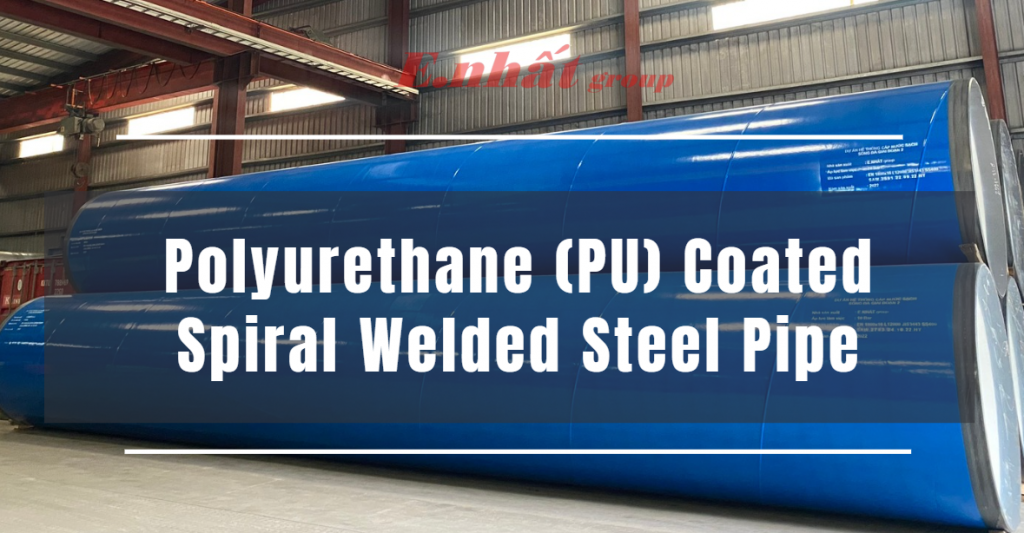
Spiral Welded Steel Pipe is an indispensable material in water supply and drainage works, oil and gas pipelines, wharves, wind power and large-scale technical infrastructure. However, to ensure safety, longevity and efficiency, the acceptance of spiral welded steel pipes according to technical standards is a vital factor.
Below are 10 factors that must be carefully checked before accepting spiral welded steel pipes, helping contractors, supervisors and investors avoid risks and ensure project quality.
1. Geometric dimensions – accurate to the millimeter
- Outside diameter (OD), wall thickness (WT), pipe length must be in accordance with the design drawing or contract.
- Allowable errors must be within the limits according to API 5L, ASTM A252 or TCVN standards respectively.
- Special attention should be paid to pipe sections used for joints, butt welding or buried.
2. Weld quality – the heart of spiral welded steel pipes
- Inspect the entire length of the spiral weld by ultrasonic (UT) or radiographic (RT).
- There must be no cracks, porosity, overlap, edge burn, or lack of penetration.
- Evaluate the weld for evenness, penetration, and tensile strength according to API/ASTM standards.
3. Material certification (Mill Test Certificate – MTC)
- Each batch of products must have a clear MTC, recording information about steel type, number of batches, chemical composition, physical and mechanical properties.
- Check whether the steel meets design standards (such as API 5L Gr.B, X42, X52, ASTM A252 Gr.2…).
4. Hardness and tensile strength – not to be missed
- Physical and mechanical tests: tensile strength, yield strength, elongation.
- Ensure that the pipe is capable of withstanding pressure, especially in high pressure water supply, oil pipeline, and pile foundation applications.
5. Corrosion test – protective coating
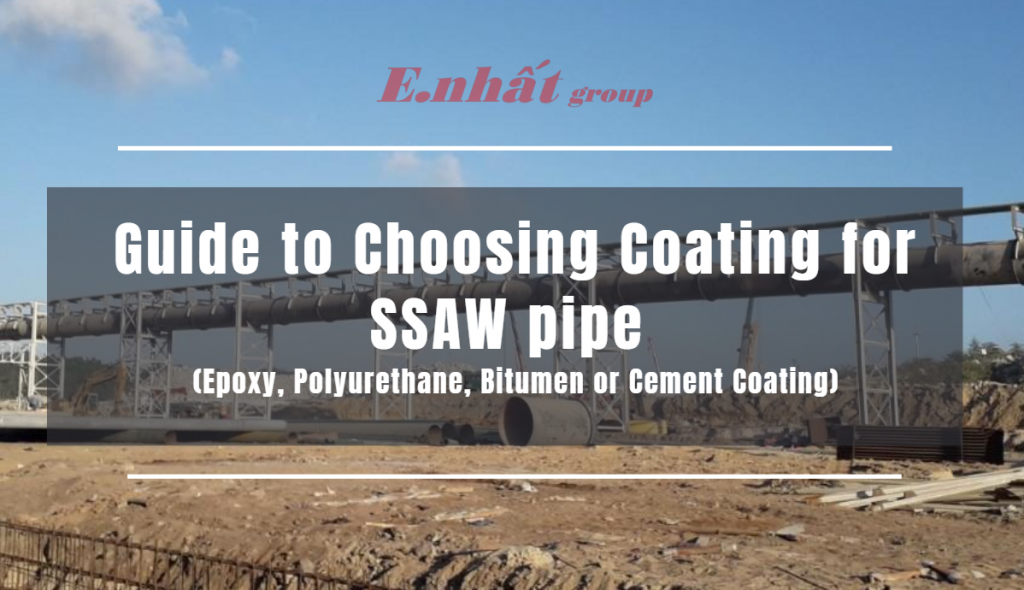
- For pipes coated with epoxy, bitumen, cement or 3-layer PE, it is necessary to check:
- Coating thickness (according to TCVN or project standards)
- Check for adhesion, defects, peeling or cracking.
- For coastal works, it is necessary to ensure anti-electrochemical corrosion.
6. Straightness and curvature
- Eccentricity and warping must not exceed the allowable level.
- Use a long steel ruler + tension wire to check the curvature of the entire pipe along the longitudinal axis.
- If the pipe is slightly bent – measures must be taken to straighten it properly before installation.
7. Pipe ends – squareness check and edge treatment
-
The pipe end must be cut at right angles, not dented or distorted.
-
If the pipe end is used for welding, it must be beveled at a correct angle of 30°-37° and checked with a specialized angle gauge.
-
If the pipe end is capped – the material and storage method must be checked.
8. Magnetic Testing – Underground Crack Detection (MT)
- Apply MT to detect small cracks in welds that are subjected to high pressure or work under high pressure.
9. Surface cleaning – rust, grease, impurities
- The pipe must be clean on the surface, free of rust, steel dust, industrial grease or untreated cuts.
- This is especially important if the pipe is to be coated with anti-corrosion or used for potable water supply.
10. Records, logs, archived images – transparency throughout the process
- Keep complete quality records: MTC, QC drawings, weld inspection records, UT/RT/MT reports.
- Have actual photos of each batch and each stage for comparison – especially in state-funded projects or audited projects.
At E.NHAT, every spiral welded steel pipe product undergoes strict quality control steps, from raw materials, spiral welding, to anti-corrosion coating and delivery. We do not just sell steel – we deliver reputation.