

 VN
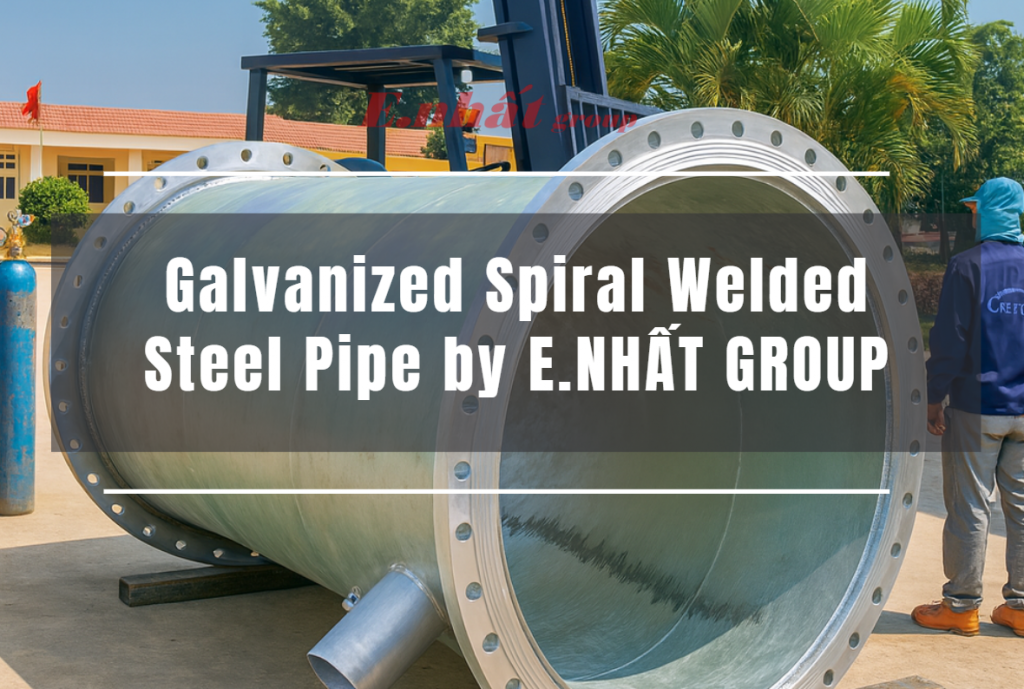
Learn about galvanized spiral welded steel pipes: process, standards, galvanizing types (hot dip, coil galvanizing, zinc spraying), applications and technical notes.
1. Overview: What is “Spiral welded steel pipe”?
2. What are the options for “galvanizing” spiral welded pipes?
Zinc (Zn) protects steel by anode sacrificial mechanism and zinc salt film formation. With spiral welded pipes, there are actually 3 main directions:
- Hot-dip galvanizing after fabrication (HDG – hot-dip): applied to pipes/tubes produced on automatic dipping lines; reference standard EN 10240 (BS EN 10240) on zinc layer requirements and testing for steel pipes. For fabricated structures (not tubes), ISO 1461 (equivalent to ASTM A123) provides general regulations for hot-dip galvanizing after fabrication.
- Continuous galvanizing on steel coils (pre-galvanized coil), then rolled – welded into pipes: apply coil steel according to EN 10346 (Z, ZF, ZA, AZ…). For example, Z275 = 275 g/m² total on both sides (≈ 38–40 µm total), common in the galvanized steel coil industry. Note: the weld area will lose zinc and need to be repaired and protected according to ASTM A780.
- Zinc spray/metallizing (thermal spray metallizing): suitable for large diameter pipes that are difficult to galvanize the whole line; ISO 2063 (parts 1 & 2) specifies the design, quality requirements and materials for zinc/aluminium spraying. External paint finishes may be combined.
Quick difference – pre-galv vs. hot-dip: Hot-dip galvanizing typically provides a thicker zinc layer and better outdoor durability than coil galvanizing (pre-galv), in exchange for a more uniform coil surface aesthetic.
3. Typical applications of galvanized spiral welded steel pipes
- Water supply & drainage & raw water: spiral welded steel pipes of medium/large diameter according to AWWA C200, combined with zinc/epoxy/PU/tape layer depending on underground/sea burial environment. (Zinc protective outer surface; inside pipe is usually lined with epoxy or cement mortar depending on standard).
- Infrastructure – steel structure: air duct, cylindrical casing pipe, cable sheath pipe… prioritize anti-rust zinc surface, easy to paint and finish.
- Oil and gas/technical pipeline: API 5L pipe – zinc/metallized layer used as outer protective paint/metal system, combined with polyolefin tape wrapping when buried underground.
4. Comparison table of 3 common zinc protection systems
| Protective zinc system | Reference standards | Thickness/zinc content (typical) | Suitable pipe size | Technical notes |
| Hot dip galvanizing after fabrication (HDG) | EN 10240 (pipe), ISO 1461 (structure) | according to the grade/type in the standard | DN small-medium, pipe/tube | Even zinc layer on the outside; check for adhesion and defects. |
| Pre-galvanizing EN 10346 | EN 10346 (Z, ZF, ZA, AZ…) | eg. Z275 = 275 g/m² (two sides) | galvanized steel coil pipe | Zinc loss weld area → repair according to ASTM A780. |
| Zinc spraying (ISO 2063) | ISO 2063-1/-2 | according to the spray system design (µm) | large tube/non-immersible | Often combined with a paint finish; marine corrosion resistant. |
5. Benefits of “galvanizing + spiral welding” in practice
- Long-term corrosion resistance: electrochemical zinc protection → reduces outdoor/wet soil/industrial rust. (Thick HDG is usually more durable than pre-galv).
- Optimized life cycle costs: reduced repainting cycles, reduced system downtime for repairs.
- Manufacturing flexibility: spiral welded pipes produce large diameters and long lengths, stable SAW welds for large batches and economical roll plates.
- Compatible with many additional coating systems: can combine FBE (AWWA C213), PU (AWWA C222) or C214 tape coating for spiral welded steel pipes in poor soil/coastal areas.
6. Important technical note (don’t “skip steps”)
- Standard binding right from HSMT/HĐ:
Water projects: cite AWWA C200 (pipe manufacturing), choose suitable lining/coating system (FBE C213, tape C214…); oil and gas projects: cite API 5L (PSL1/PSL2). - Select “zinc type” according to size & installation conditions:
Small–medium pipes can be hot-dip galvanized according to EN 10240; large pipes difficult to dip → zinc spraying ISO 2063 + finishing paint; pipes from coils coated according to EN 10346 need post-weld repair. - Repair of weld/cutting areas & zinc layer defects:
ASTM A780 required: rich zinc paint (≥ ~65% metallic zinc in dry film), solder or zinc spray; control of repair area thickness. - Checking and accepting zinc layer:
Measure thickness, adhesion, surface defects according to applicable standards (EN 10240/ISO 1461); prepare repair report ASTM A780 with location & area. - Dual protection for harsh environments:
For underground/coastal spiral welded steel pipes, zinc + paint/PU or zinc + tape coating is preferred, combined with PE coating if necessary (refer to North American water system practice).
7. “Quick pick” table by project scenario
| Script | Recommendations | Notes |
| Underground water supply in inner city | SSAW pipe according to AWWA C200 + FBE (C213) or C214 tape coated; outside pipe with/without zinc as required | Balance between corrosion resistance & cost |
| Open pipe/factory | Galvanized SSAW pipe (EN 10240/ISO 1461) or coil coated EN 10346 + A780 | Prioritize aesthetics & low maintenance |
| Large diameter pipes are difficult to embed. | ISO 2063 zinc spraying + finishing paint system | Super large/hard to embed tube friendly |
| Oil and gas/technical pipeline | API 5L pipe + environmentally friendly coating system | PSL regulation, non-destructive testing. |
8. Frequently asked questions about galvanized spiral welded steel pipes
1) Is galvanized spiral welded pipe suitable for drinking water?
.Yes, if the pipe/glue/gasket material meets drinking water standards and the inner lining meets standards (e.g. FBE interior) and the cleaning and rinsing procedures are controlled. The AWWA C200 standard is applied by major plumbing companies for spiral welded pipes ≥ DN150.
2) Why do welds need to be repaired with zinc after using galvanized coils?
Since the arc zone will burn away the zinc layer; a repair per ASTM A780 (zinc rich/metallized paint) must be made to restore corrosion protection.
3) Choose hot dip galvanizing or coil galvanizing?
- Hot dip: zinc layer is usually thicker – more durable outdoors; suitable for pipe/tube size allowing for dipping tank.
- Coil galvanizing: uniform surface aesthetics, optimized for mass production; requires weld repair and inspection process.
Conclusion
Galvanized spiral welded steel pipe combines the structural strength and manufacturing of SSAW pipe and the corrosion protection of zinc, suitable for many scenarios from water supply, infrastructure to industry. The choice of galvanizing system (hot-dip, coil galvanizing, spray galvanizing) should be based on pipe diameter/length, installation conditions and project standards. The key to success lies in: correct standard binding, zinc coating inspection and correction according to ASTM A780, and coating system coordination for harsh environments.
Consulting – Quotation – Supply Spiral Welded Steel Pipe
SEE MORE ARTICLES ABOUT SPIRAL WELDED STEEL PIPE
OUR PROJECTS