

 VN
VN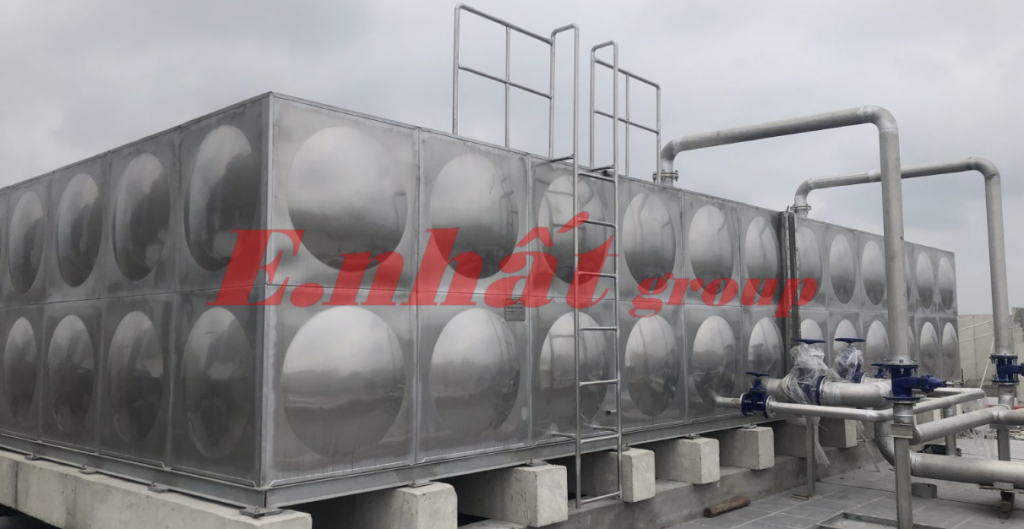
In modern constructions, stainless steel assembled water tanks are increasingly popular thanks to their convenience, high durability and fast construction ability. However, choosing which stainless steel material and which reputable supplier is a problem that makes many investors and engineers wonder. This article will help you distinguish POSCO stainless steel assembled water tanks from other types of stainless steel.
1. What is an assembled water tank?
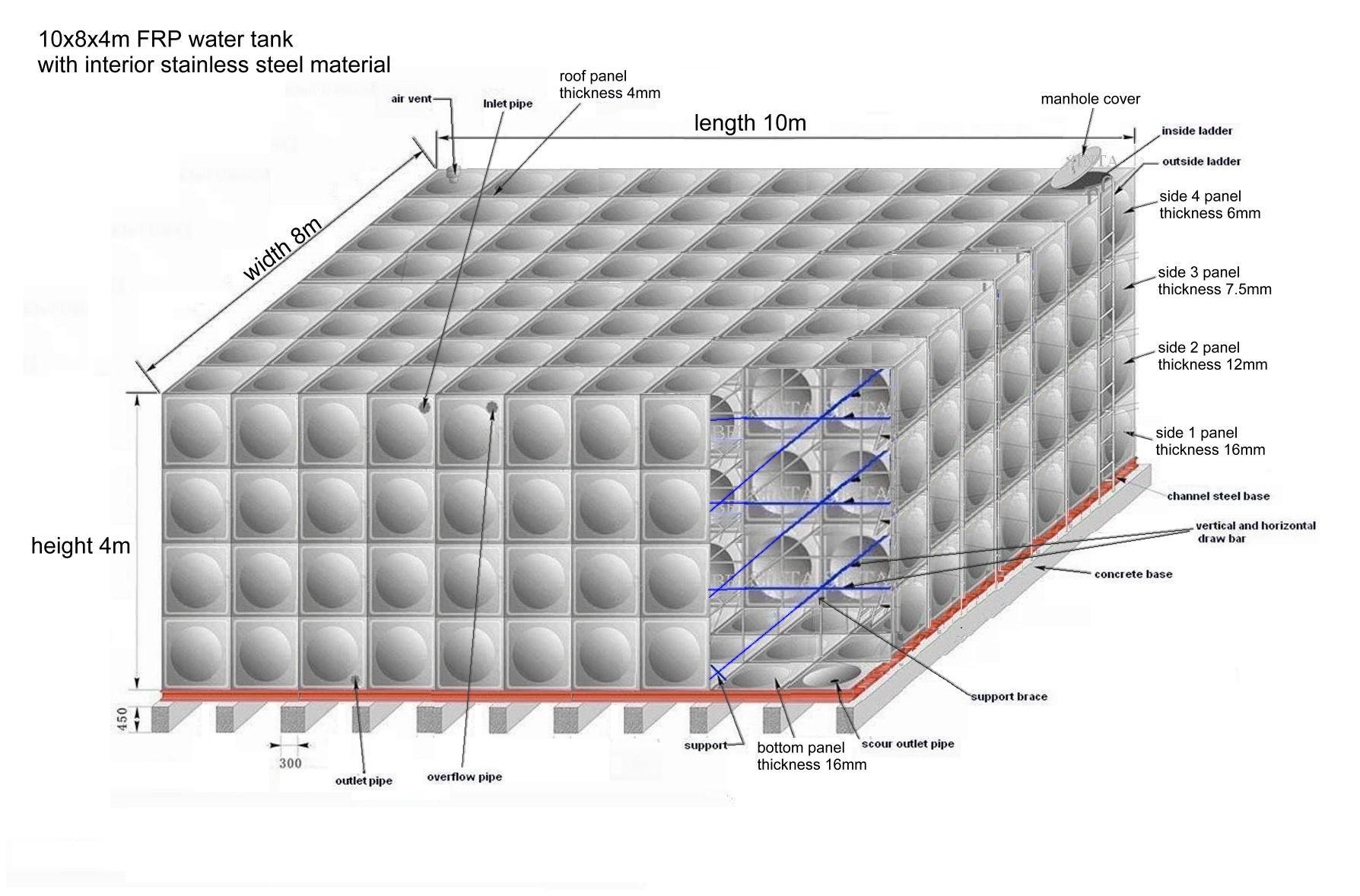
Structure of assembled water tank:
2. Popular types of stainless steel used for assembled water tanks
Currently, on the market there are 4 main stainless steel groups used for assembled water tanks:
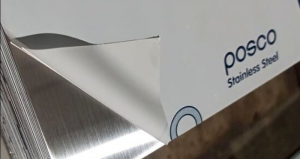
🔹 Inox POSCO (304/316 genuine)
- Source: Manufactured by POSCO (Korea), meets international standards.
- Advantage: Composition Ni ≥ 8%, Cr ≥ 18% (304); Ni ≥ 10% (316) → very good anti-rust and anti-corrosion. Lifespan > 20-30 years, safe for health.
- High price but worth the quality.
🔹 Stainless steel 304 unknown origin
- Source: Made from recycled or cheap imported 304 stainless steel (usually from China).
- Advantages: Price is about 10-20% lower than POSCO 304 stainless steel
- Disadvantages: Ni, Cr content does not meet standards → lower rust resistance, shorter life span, easy to rust in harsh conditions.
- Application: Cheap domestic water tanks, where buyers do not require CO, CQ documents.
🔹 Inox 201
- Composition: Low Ni content (~3-5%), replaced by Mn.
- Advantages: Cheap (about 30-40% cheaper than 304); easy to process.
- Disadvantages: Poor rust resistance, easy to yellow, corrode when exposed to salt water, alum water, or long-term humid environments.
- Applications: Often used for cheap domestic water tanks, temporary tanks, or projects that do not require high water quality.
🔹 Inox 430
- Source: Made from recycled or cheap imported 304 stainless steel (usually from China).
- Advantages: Price is lower than genuine 304 stainless steel POSCO or Nippon, JFE.
- Disadvantages: Ni, Cr components do not meet standards → lower rust resistance, shorter life, easy to rust in harsh conditions.
- Application: Cheap domestic water tanks, where buyers do not require CO, CQ documents.
3. Comparison of stainless steel types used for assembled water tanks
| Criteria | Inox POSCO 304/316 | Inox 304 unknown origin | Inox 201 | Inox 430 |
| Durability | Excellent | Medium | Low | Very low |
|
Anti-rust |
Excellent | Lower than POSCO | Low | Very low |
| Lifespan | 20-30 year | 10-15 year | 5-10 year |
<5 year |
|
Cost |
High | Medium | Cheap | Very cheap |
| Application | Buildings, hospitals, factories | Civil | Temporary works |
Rarely used |
💡 Conclusion: If you need a durable, safe, and corrosion-resistant water tank → You should choose genuine POSCO stainless steel.
4. Tips to identify high quality stainless steel water tanks
✅ Shiny, uniform stainless steel surface.
✅ Does not attract magnets (or attracts very slightly with 304/316).
✅ Dilute acid test: 304/316 stainless steel is not corroded or discolored.
✅ Has POSCO label or embossed logo of reputable manufacturer.
✅ Price is not unusually low (avoid buying fake stainless steel).
5. Summary: Which type of stainless steel assembled water tank should you choose?
👉 If the project requires high requirements (buildings, hospitals, food factories, coastal areas): Choose genuine POSCO 304/316 stainless steel, reputable suppliers such as E.NHAT.
👉 If the project is civil, the cost is limited: You can choose 304 stainless steel but need to check the origin clearly.
👉 Do not choose 201, 430 stainless steel for long-term water tanks, unless the purpose of use is temporary.
🎯 Contact now for consultation on quality standard POSCO stainless steel water tanks!
Are you looking for a durable, affordable, and suitable stainless steel water tank solution?
🌟 Our team of experts is ready to support you from design consultation, material selection to complete construction!
