VN
VNLarge-scale wastewater treatment steel pipe solution: Cost-effective, durable with spiral welded steel pipe – high pressure, long life, meeting professional API/ASTM/BS standards.
In large-scale industrial and urban wastewater treatment projects, the piping system plays a decisive role in the transmission, storage and treatment of waste. Among the options, spiral welded steel pipes stand out with their high strength, durability and economic efficiency.
This article analyzes from the aspects of technology – engineering, application – construction to standards – maintenance, to provide a comprehensive spiral welded steel pipe solution for wastewater treatment systems.
1. Overview of spiral welded steel pipes
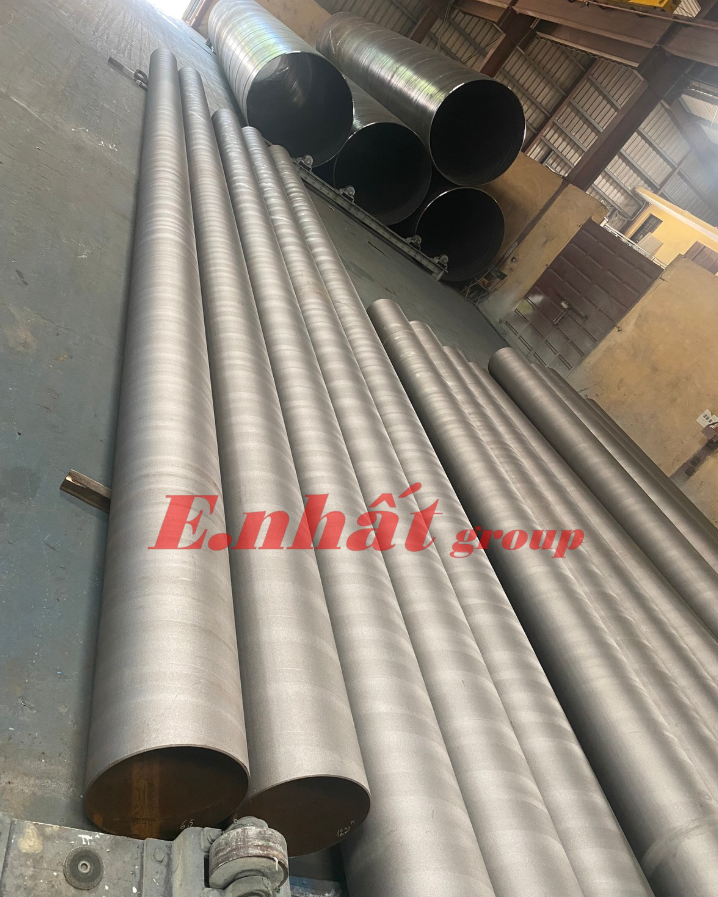
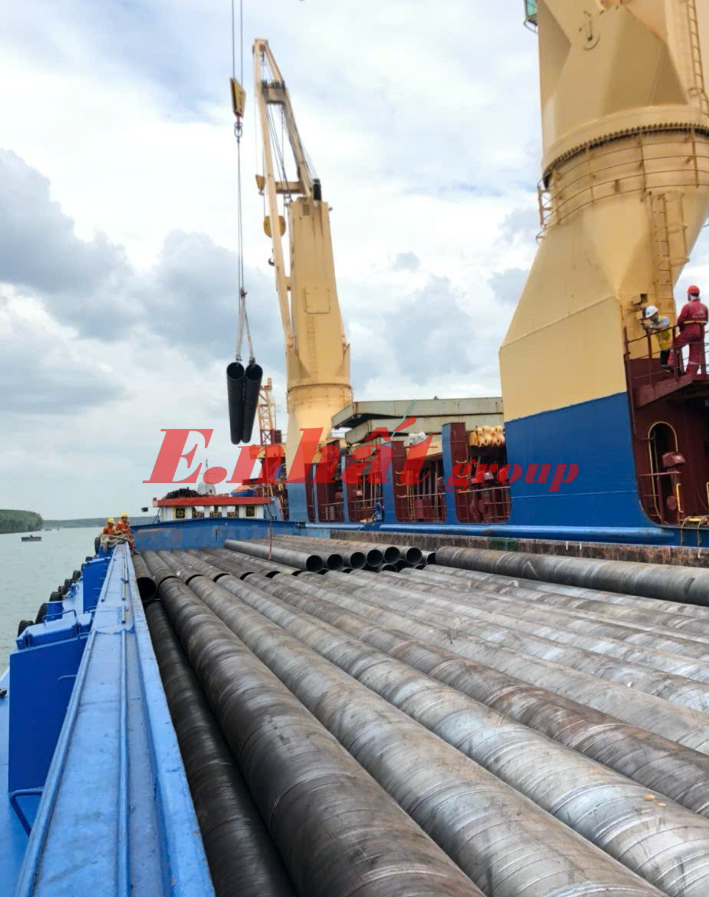
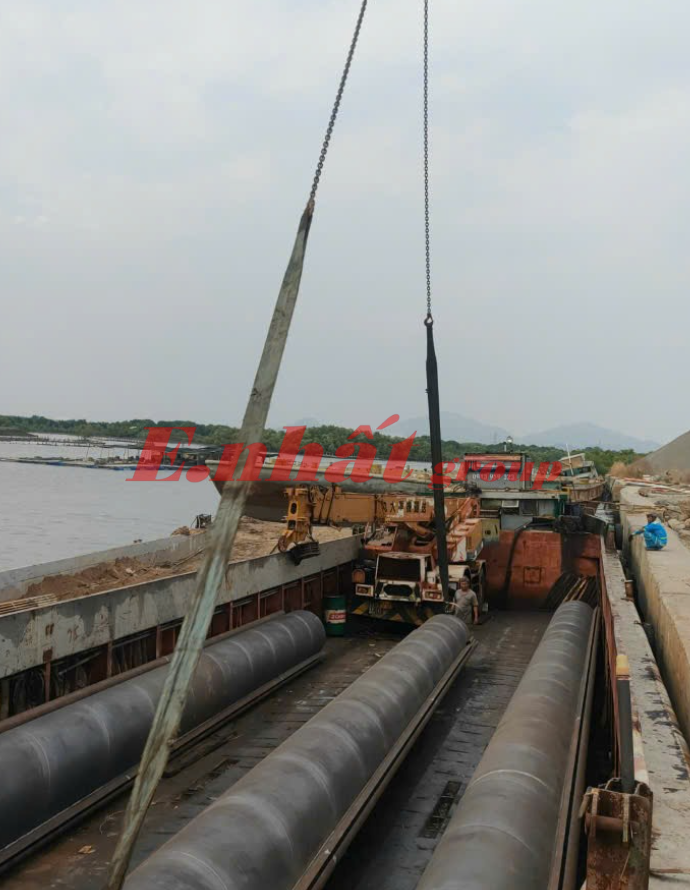
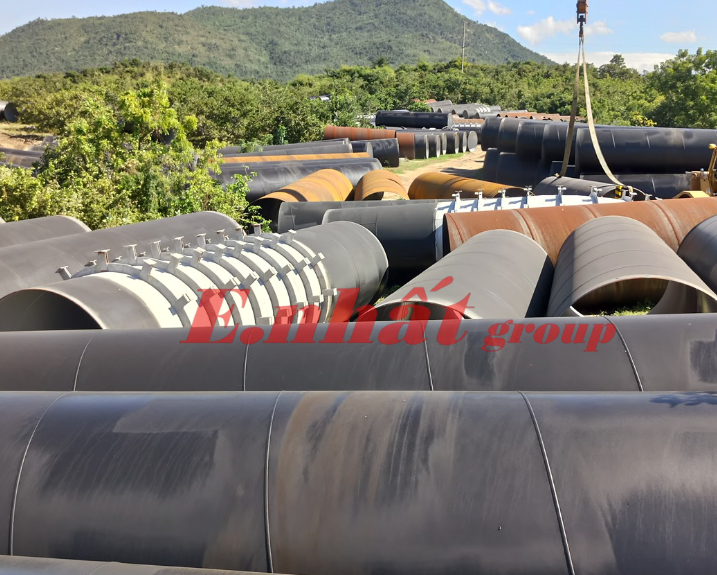
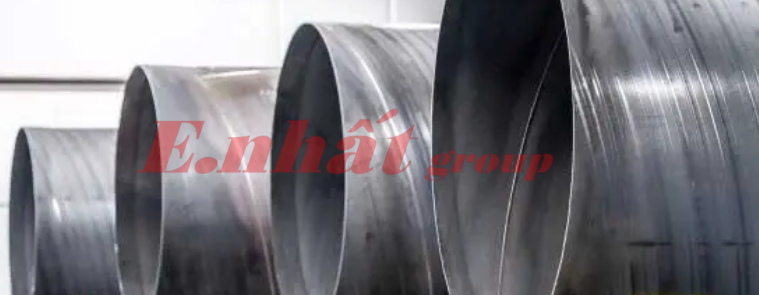
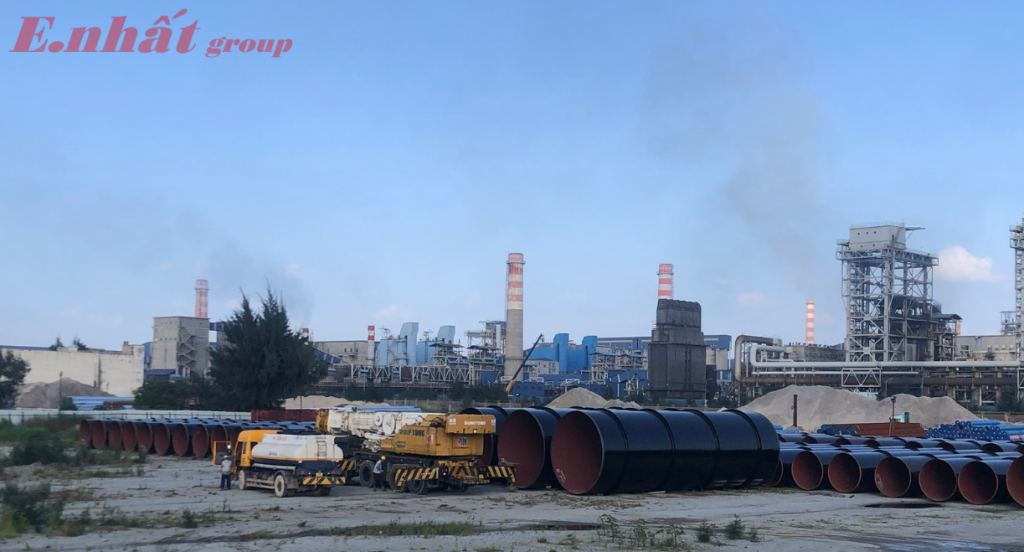
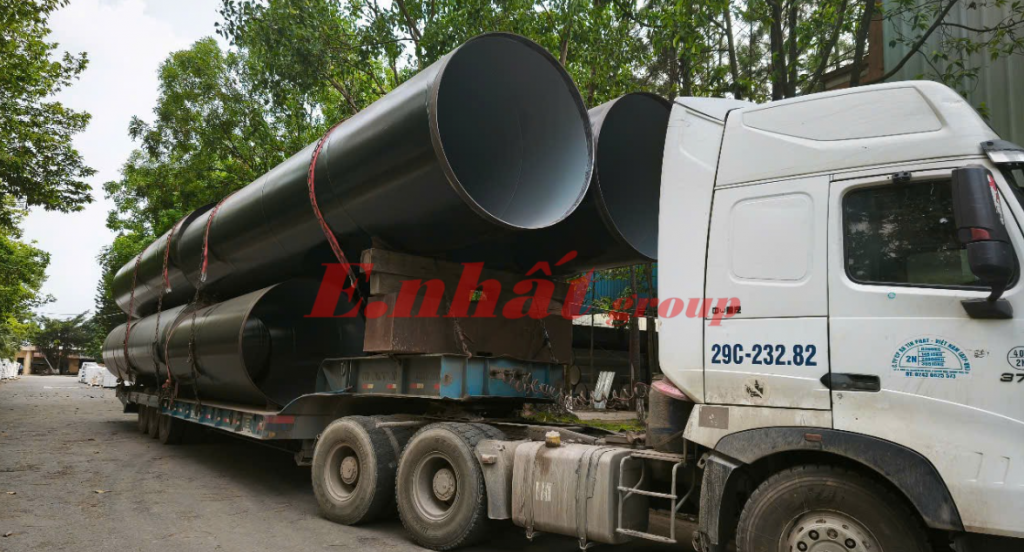
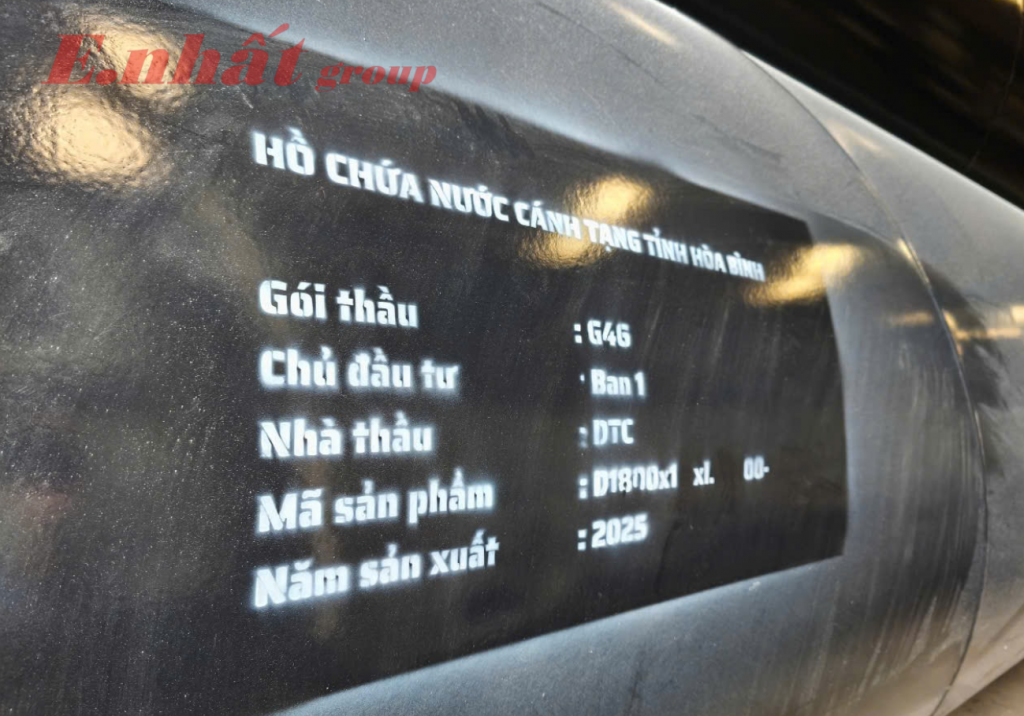
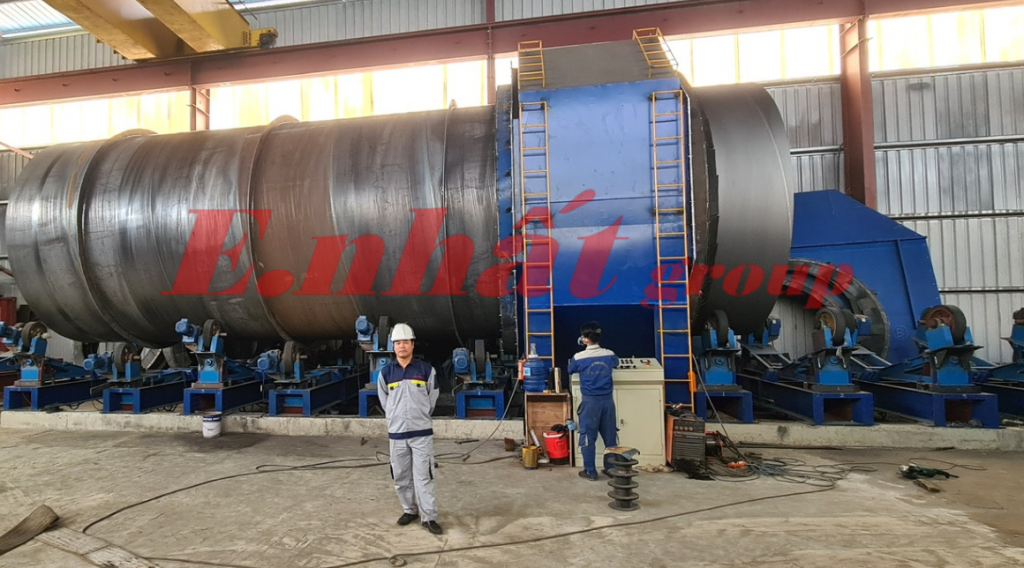
Spiral Submerged Arc Welded Steel Pipe (SSAW – Spiral Submerged Arc Welded steel pipe) is a steel pipe formed from rolled sheet, high temperature then spirally rolled, welded with double-sided submerged arc welding technology. The spiral weld is evenly spread throughout the pipe body, helping to uniformize the force, withstand good pressure and can be produced with large diameters, up to 4000mm, wall thickness from 3-40mm, gallium length 6-12m or as required.
Production process includes:
- Heating and rolling of steel billets.
- Spiral coil steel sheet rolling, joint welding.
- Weld processing, flattening and quality inspection by ultrasonic, hydraulic
- Cutting, galvanizing/epoxy coating or protection to increase corrosion resistance and service life.
2. Advantages and disadvantages of spiral welded steel pipes in wastewater treatment applications
✅ Advantages of spiral welded steel pipes:
- High pressure and impact resistance: Spiral welds are evenly distributed along the spiral welded steel pipe, helping to reduce stress compared to straight welded pipes, the thickness can be reduced by 10-25% while still ensuring working pressure.
- Durability and long life: If the spiral steel pipe is protected by paint, epoxy or galvanized surface, the steel pipe’s life can reach several decades in chemical and wastewater environments.
- Diverse sizes, easy to construct: From small to large diameters, easy to cut, transport and install in wastewater treatment works. In particular, spiral welded steel pipes can be produced with very large diameters (up to DN4020), suitable for large-scale urban wastewater and drainage systems.
- Reasonable cost: Compared to cast or seamless steel pipes, SSAW saves raw material costs, reduces waste due to continuous production, uses small steel coils, low scrap rate and effective spiral welds.
- High Customization: Easy to manufacture according to diameter, length and standard requirements such as API 5L, ASTM A53/A252, BS 4360…
⚠️ Drawbacks:
- Weld quality depends on technique: need to check and weld the gap carefully by ultrasonic, hydraulic.
- Slight dimensional error: Although the tolerance when well controlled is only ~0.12%, it may still need to be machined after installation.
- Not suitable for ultra-high pressure: In extreme pressure applications, seamless steel pipe is still superior.
3. Technical standards for spiral welded steel pipes
- API 5L: oil and gas industry, wastewater with high standards for pressure and corrosion.
- ASTM A53, A252: popular US standards for water, gas, and steam pipes.
- BS 4360/5950: British standards, used for steel structures in environmental treatment.
- EN (EN10217, EN10219), GB/T, DIN: European, Chinese, German standards for structural and pressure steel pipes.
- JIS (G3444, G3452): popular Japanese standards for structural steel pipes, water pipes.
- Popular materials: Q235, Q345, even X52–X70 depending on the load-bearing requirements, with a thickness of 3.2–40mm and a maximum length of 12–24m.
E.NHAT Group has full standard certifications, ensuring the quality of spiral welded steel pipes and steel pipe accessories.


4. Application of spiral welded steel pipes in wastewater treatment systems
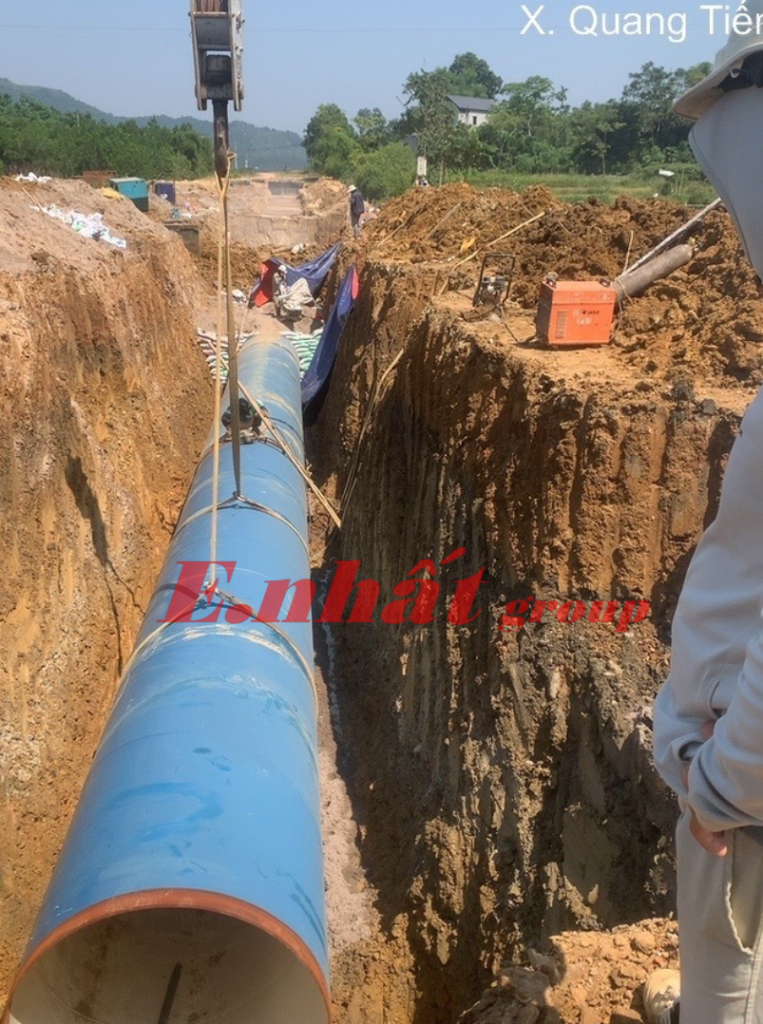
- Line pipes for conducting and collecting wastewater from residential areas, industrial zones to the treatment station: main pipes DN600–DN2000 withstand loads, rain, mud, odor.
- Diversion channels, distribution through filter tanks, UASB, filter membranes: require corrosion resistance, odor control.
- Outfall pipes for drainage after treatment, circulation and maximum discharge: withstand high pressure, resistant to chemical corrosion, heat.
- Circulation pipes, treatment recovery in the station such as coagulation tanks, filters, pumps, reuse in chemical and biological treatment processes.
- Bored piles, retaining walls, manholes: large pipes to block soil, protect the structure of the building.
- Air/steam supply pipes, steam, tank bottom gas, used in biological aeration systems, sludge treatment, biogas.
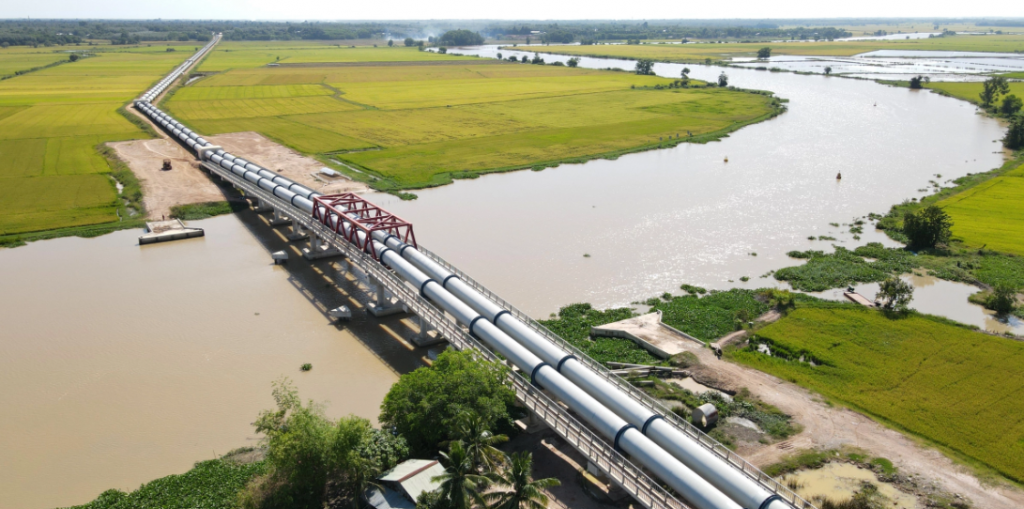
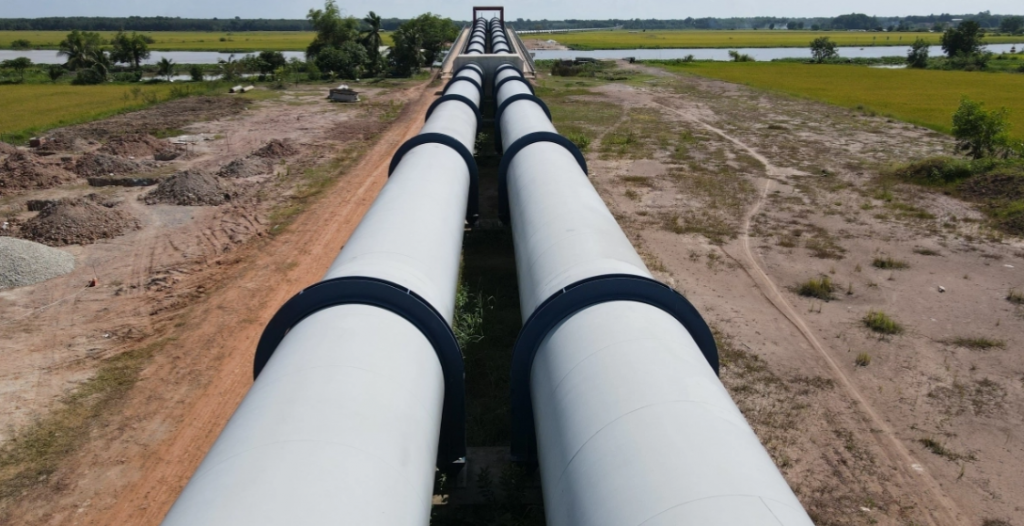
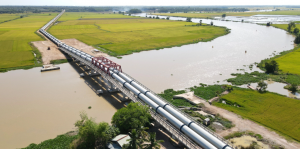 Image: Steel pipe carrying water across the Vam Co Dong River (2022)
5. Maintenance and guarantee of spiral welded steel pipes’ life
- Surface treatment: Epoxy paint, PU paint, PE or galvanized; especially with bitumen or coal coating to extend the life up to 100 years
- Periodic inspection of welds: Ultrasonic, hydraulic test, observation of cracks or metal corrosion according to maintenance plan.
- Physicochemical monitoring of the environment: Adjust pH, chemical treatment to prevent corrosion.
- Replace when necessary: Prioritize using pipes of the same standard for easy connection, reducing errors in the system.
- Quality logbook: Clearly record the certificate, installation date, inspection, cleaning for easy traceability.
6. Selection and optimization of spiral welded steel pipe design
When designing a steel water pipe system, it is necessary to:
- Choose the appropriate diameter & thickness based on capacity, flow rate, pressure; optimize costs while ensuring performance.
- Choose the appropriate standard: API when there are chemicals, ASTM for domestic wastewater, BS/EN for high pressure.
- Choose the appropriate protective layer for environmental conditions (soil, groundwater, chemicals).
- Take into account joints, valves, elbows: use standard accessories to avoid leakage.
- Inspection zones: high pressure and corrosion areas need to be strictly inspected.
7. Benefits of using spiral welded steel pipes
| Benefits |
Description |
|
Economic |
Raw materials for producing spiral welded steel pipes are extremely economical, with a synchronized production line and lower production costs than seamless pipes. |
|
Sustainable |
Spiral welded pipe life span up to >50 years if maintained, effective anti-corrosion layer avoids early pipe replacement |
|
Flexibility |
Large diameter spiral welded steel pipe is easy to expand the system, high strength, easy to carry and install at the site |
|
International standards |
Diverse standards, easy to apply in international systems or export projects |
✅ Conclusion
Spiral welded steel pipes are the ideal solution for large-scale wastewater treatment systems thanks to their durability, good load-bearing capacity, diverse sizes and reasonable cost. To ensure optimal efficiency, it is necessary to comply with API/ASTM/BS/EN standards, anti-corrosion surface treatment, and periodic inspection of welds and fluid environments. With proper design, construction and maintenance procedures, spiral welded steel pipes will be a reliable backbone for wastewater treatment systems for decades.
CONTACT US NOW TO GET THE LATEST QUOTE FOR SPIRAL WELDED STEEL PIPE!