VN
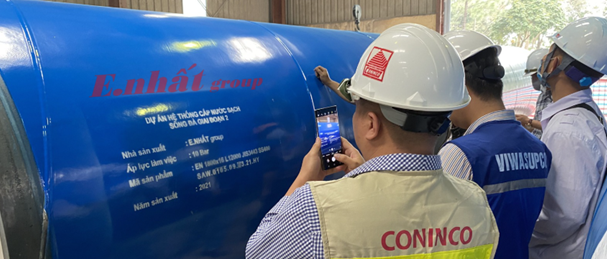
Comparison of two non-destructive testing methods MT and UT. E.NHAT applies professional NDT to spiral welded steel pipes, ensuring optimal quality.
In the steel pipe industry, especially spiral welded steel pipe products, quality inspection is always a vital factor to ensure the durability, tightness and safety of the project. At E.NHAT – a leading manufacturer and supplier of spiral welded steel pipes, we apply non-destructive testing methods (NDT) such as Magnetic (MT) and Ultrasonic (UT) to comprehensively inspect the products before leaving the factory.
So what are the differences between these two methods? And which is the optimal choice for each case? Let us analyze in detail from the technical perspective and practical application of these two non-destructive testing methods.
1. OVERVIEW OF MAGNETIC TESTING (MT) AND ULTRASONIC TESTING (UT)
🔹 MT – Magnetic Particle Testing
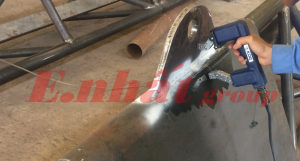
MT is a technique that uses magnetic fields and magnetic powders (magnetic particles) to detect surface and near-surface defects such as cracks, pitting, open welds… on magnetic materials (carbon steel, alloy steel…).
This method is very suitable for quick inspection of longitudinal and spiral welds on steel pipe bodies. The inspection process usually includes the following basic steps: cleaning the surface, magnetizing the inspection area, sprinkling dry magnetic particles or magnetic solution, observing the magnetic particle distribution to identify cracks.
🔹 UT – Ultrasonic Testing
UT is a method that uses ultrasonic waves to transmit into the material. When the waves encounter a defect, a part will be reflected back. The results are displayed on the measuring device, helping to determine the location, size and depth of the defect inside the material.
UT can evaluate the size, depth and location of defects very accurately without direct access, suitable for large pipe products with high wall thickness, such as water pipes, gas pipes, steel piles, etc.

2. DETAILED COMPARISON OF MT AND UT – ADVANTAGES & DISADVANTAGES
| Criteria | Magnetic Particle Testing (MT) | Ultrasonic Testing (UT) |
| Location of disability | Surface and near surface | Inside the material (volumetric) |
| Applicable materials | Magnetic material (steel) | Many types of materials (steel, stainless steel, composite…) |
| Test depth | ~1-2 mm under the surface | Ability to test up to hundreds of mm |
| Sensitivity to microcracks | Very high | Medium to high. Not a main strength |
| Quantitative Ability | Unquantified (cannot measure exact size) | Can measure defect size and depth |
| Surface preparation | Clean but not too strict | High requirements, need smooth surface and good contact |
| Cost and time | Low cost, fast time | Higher cost, more time consuming |
| Technical skill requirements of technicians | Medium | High tech, calibration required, highly trained technician required |
| Mobility | High, easy to deploy on site | More specialized equipment required |
| Advantages | Extremely sensitive detection of surface cracks. Simple, easy-to-use equipment. Low cost, fast testing speed |
Detect defects inside the material. Can accurately quantify defects. Suitable for many types of materials, complex shapes. |
| Disadvantages | Applicable only to magnetic materials. Cannot detect deep defects. Cannot measure exact defect size |
Higher equipment and labor costs. Highly technical operation, careful calibration required. Insensitive to lateral or very small surface defects. |
3. APPLICATION AT E.NHAT – PRODUCTION OF SPIRAL WELDED STEEL PIPE
4. SHOULD I CHOOSE MT OR UT FOR SPIRAL WELDED STEEL PIPE?
|
Test case |
Recommendation |
|
Quick check of spiral welds |
MT |
| Check for internal defects in the pipe body |
UT |
|
Spiral welded steel pipes for hydraulic works |
Kết hợp MT + UT |
| Request for NDT certificate according to international standards |
UT |
| Products requiring low testing costs |
MT |
Conclusion: SHOULD I CHOOSE MT OR UT?
The choice of Magnetic (MT) or Ultrasonic (UT) depends on the inspection objective, the type of defect to be detected and the technical requirements of the project. At E.NHAT, we not only produce standard spiral welded steel pipes, but also apply advanced inspection technologies, ensuring that each product is strictly quality controlled, ready to meet domestic and international standards.
Consulting – Quotation – Supplying High Quality Spiral Welded Steel Pipes
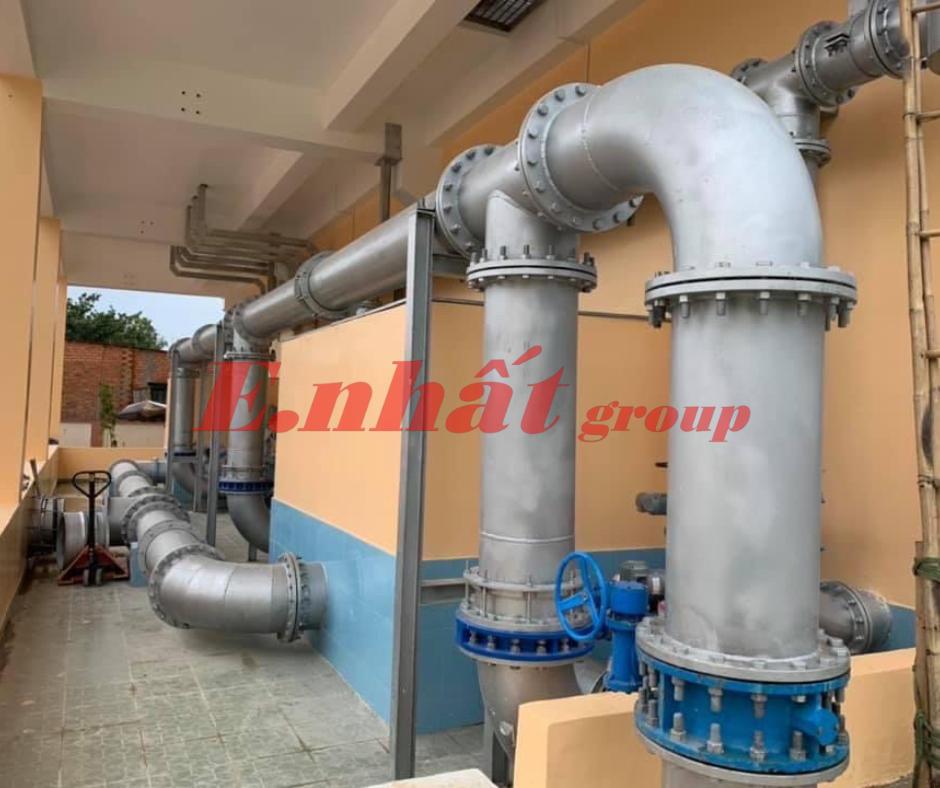
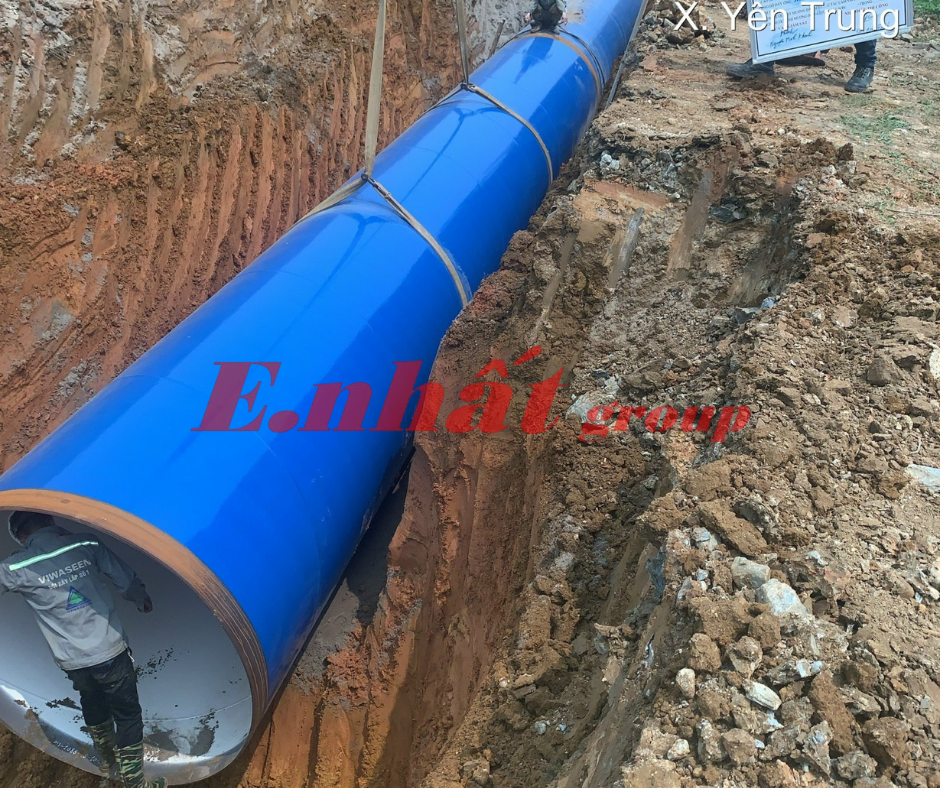
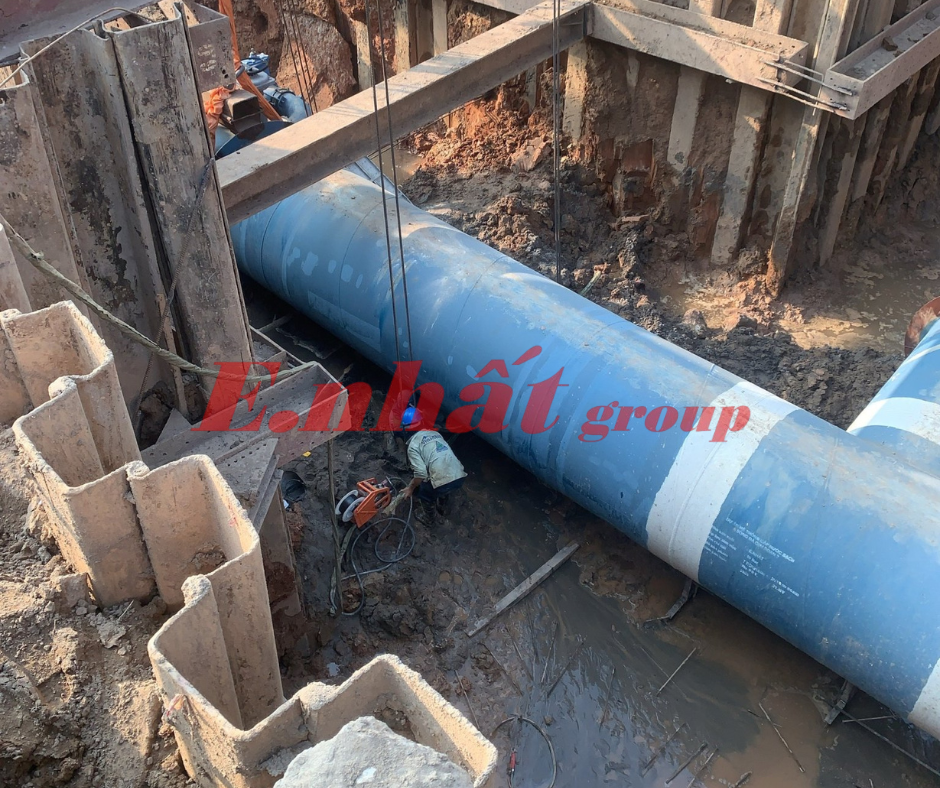
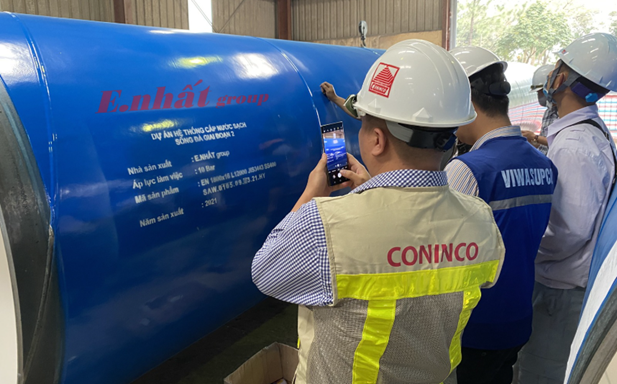
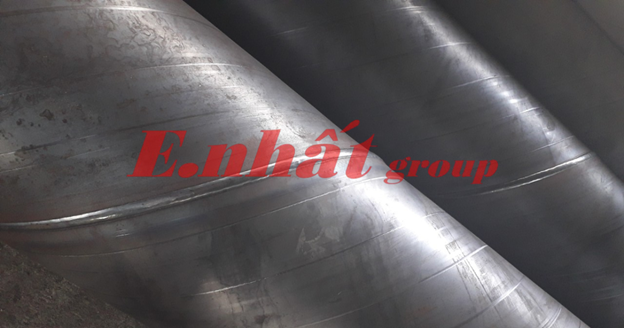
Image of spiral welded steel pipe at E.NHAT: